

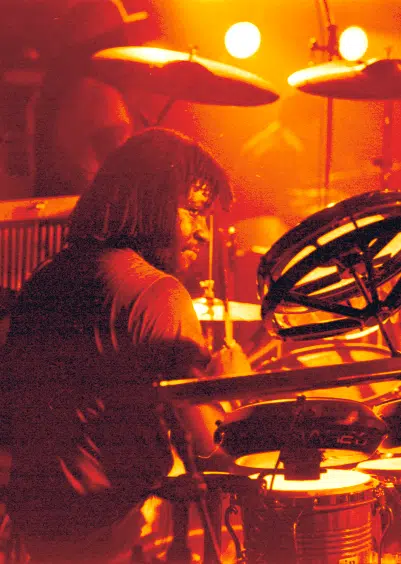
Reggae just lost its heartbeat.
Sly Dunbar, the Jamaican drummer whose grooves quietly powered half of modern music, has died at the age of 73. If reggae, dancehall, hip-hop, or even pop ever made you move without you knowing why, chances are Sly was somewhere in the DNA.
His wife, Thelma Dunbar, confirmed his passing to The Gleaner. No official cause of death was shared, though Dunbar had faced health issues in recent years. He died peacefully at home in Jamaica, just a day after spending time with friends. A soft ending for a man whose rhythms shook the world.
The Backbone of Reggae’s Evolution
Born Lowell Fillmore Dunbar on May 10, 1952, in Kingston, Jamaica, Sly was a prodigy before the word got trendy. He ditched school at 13 to chase drums, practicing on desks and tin cans before ever touching a real kit. His first proper recording came as a teenager with Lee “Scratch” Perry’s Upsetters, a legendary starting point if there ever was one.
The real turning point arrived in the early ’70s when Sly linked with bassist Robbie Shakespeare. Together, they became Sly & Robbie, the most recorded rhythm section in music history. Over 200,000 recordings. Let that sink in.
Sly & Robbie: From One Drop to World Domination
As the house band at Channel One Studios, then later as founders of Taxi Records, Sly & Robbie reshaped reggae from the inside out. They helped pioneer the rockers rhythm, injecting funk, disco, and syncopation into the traditional one-drop. Suddenly, reggae hit harder, traveled further, and spoke louder.
They powered classics for Black Uhuru, Peter Tosh, Gregory Isaacs, Dennis Brown, and Barrington Levy. Their work with Black Uhuru culminated in Anthem, which won the first-ever Grammy for Best Reggae Album in 1985.
Then they went global.
Grace Jones’ Nightclubbing. Bob Dylan’s Infidels. Sessions with the Rolling Stones, Mick Jagger, Joe Cocker, Yoko Ono, Carly Simon. Sly didn’t just adapt to genres. He bent them.
Digital Pioneer and Dancehall Architect
While many drummers feared drum machines, Sly leaned in. In the ’80s and ’90s, he embraced programming, samplers, and electronic kits, helping bridge reggae into dancehall before most even saw it coming.
The “Bam Bam” riddim changed everything. Minimal. Radical. No bass. Just vibes. It became the backbone of tracks like “Murder She Wrote,” one of dancehall’s most enduring global hits.
From Shabba Ranks to No Doubt, from Maxi Priest to OMI, Sly’s fingerprints were everywhere. Subtle, but undeniable.