
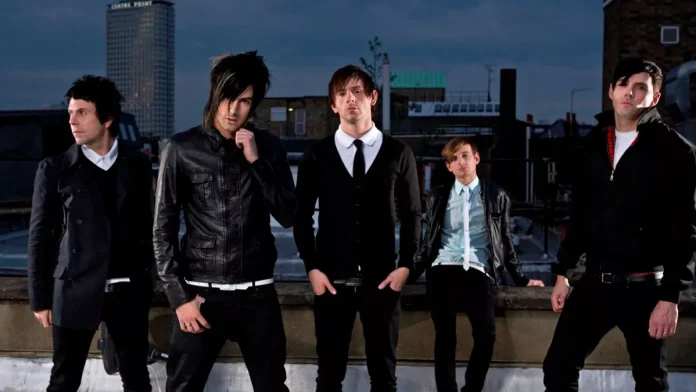

In the early 2000s, Lostprophets were untouchable. They weren’t just another British rock band; they were the moment — that perfect mix of eyeliner, distortion, and ambition that made teenagers feel invincible. Their sound lived between emo angst and arena dreams, like the UK’s answer to Linkin Park with a Cardiff accent and swagger.
Then, a decade later, it all disintegrated in a way so horrific that fans and the entire rock scene still haven’t fully processed it.
When frontman Ian Watkins was convicted in 2013 of child sex crimes so unspeakable they broke global headlines, the world watched in shock. The news didn’t just destroy a band — it obliterated an era.
When the Prophets Ruled
At their peak, Lostprophets were rock royalty. Their second album, Start Something (2004), was basically a rite of passage. “Last Train Home” was on every playlist, every CD-R burned for a friend, every Kerrang! countdown.
The band’s look — black wristbands, messy hair, Vans — was the blueprint for mid-2000s alt culture. They headlined Reading and Leeds, toured the world, and even hit Billboard’s Alternative Songs No. 1.
For fans back then, they represented something pure: hope, defiance, emotion. For the UK scene, they were proof that a band from Wales could go global without selling out.
Behind the stage lights, though, something darker was happening.
The Fall: A Crime That Shattered Music
In late 2012, everything imploded. Watkins was arrested on multiple child sex abuse charges — crimes that stunned even law enforcement.
A year later, he pleaded guilty to 13 offenses, including the attempted rape of a baby. The judge called it “a new depth of depravity.” The headlines didn’t feel real — like a bad internet rumor gone viral, except it wasn’t.
The other members of Lostprophets — Lee Gaze, Mike Lewis, Stuart Richardson, Jamie Oliver, and Luke Johnson — were blindsided. They didn’t just lose their careers; they lost a decade of their lives, their art, their identity.
They issued a statement that was raw and broken:
“We are heartbroken, angry, and disgusted… We need time to reflect and rebuild.”
And just like that, Lostprophets were gone. The name itself became radioactive — erased from streaming playlists, radio rotations, and festival history.
No Devotion: Rebuilding From the Ashes
Most musicians would’ve quit. But in 2014, the remaining members re-emerged as No Devotion, fronted by Geoff Rickly, the poetic voice of Thursday. It was a smart, symbolic move: keep creating, but under a new name that carried zero ghosts.
Their debut Permanence (2015) was full of beautiful pain — atmospheric, post-punk, fragile. You could hear the trauma in it, the sound of men trying to separate who they were from who they played with. Critics loved it. Fans, too.
Still, the shadow of Lostprophets never fully disappeared. Every interview came with that one inevitable question: “How do you move on from something like that?”
The truth? You don’t. You just learn to exist beside it.
Why This Story Still Matters
For Gen Z, the name Lostprophets might mean nothing — or worse, just that band with the pedophile singer. But for millennials who grew up on their music, Watkins’ crimes felt like a betrayal of trust between artist and audience.
It also forced the music industry to confront something uncomfortable: what happens when art and artist can’t be separated because the artist destroys everything the art once meant.
The Lostprophets case became one of the first major tests of cancel culture before cancel culture existed. It raised questions that echo today — about accountability, fandom, and the myth of the rock star.
Cultural Fallout: The Death of the Rockstar Myth
Watkins’ downfall didn’t just kill a band. It killed a whole type of belief — that tortured genius and dark behavior are somehow linked. After Lostprophets, fans stopped romanticizing that chaos.
It marked a turning point in how young audiences view musicians: less untouchable gods, more flawed humans. The pedestal cracked.
In a weird way, that’s the only good that came out of it. The illusion died, and awareness grew. The industry became more vocal, fans more protective of themselves and each other.
It’s tragic that it took something so vile to force that shift — but the change stuck.
What’s Left of the Legacy
More than a decade later, Lostprophets’ music still exists, but it’s trapped in cultural limbo. You won’t hear it in playlists, but it lingers in the memory of a time when alternative rock ruled the UK.
The surviving members have built quiet, honest lives in music. Watkins’ name, however, has become a warning — a permanent stain that ensures Lostprophets will never be remembered purely for their sound.
When Watkins was killed in prison in October 2025, it didn’t feel like closure. It felt like the final punctuation mark in a story that should’ve ended long ago.
The Takeaway
Lostprophets were a band that captured a moment — and then obliterated it. Their music meant freedom, rebellion, belonging. Their end meant reckoning.
It’s a story about how the same charisma that creates heroes can also hide monsters.
And how music, no matter how powerful, can’t erase the truth behind it.
For better or worse, Lostprophets will always be the band that showed us how high you can rise — and how far you can fall.
FAQ Section
Q1: What happened to Lostprophets?
The band disbanded in 2013 after frontman Ian Watkins was convicted of multiple child sex crimes. The other members later formed No Devotion.
Q2: Can you still listen to Lostprophets’ music?
Their music remains on some platforms, but it’s widely boycotted. Many fans and stations stopped playing it due to the nature of Watkins’ crimes.
Q3: What are the remaining members doing now?
They continue to create music under No Devotion, distancing themselves from Watkins’ legacy while building something more honest and redemptive.