

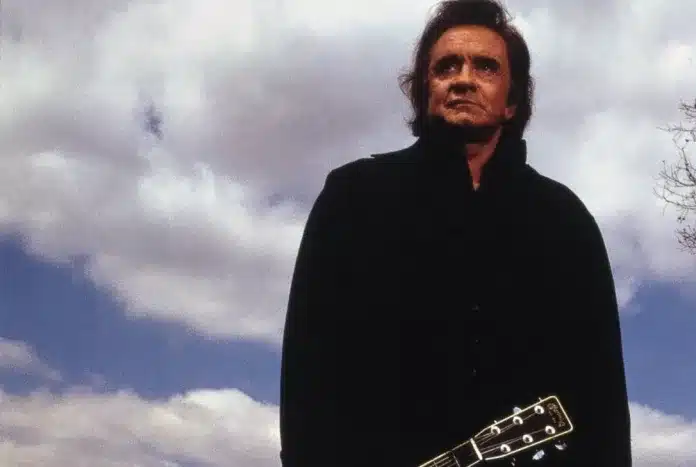
This year marks 70 years since Johnny Cash first recorded Folsom Prison Blues — a moment that not only launched his career but redefined American music.
In the summer of 1955, a then-unknown Johnny Cash stepped into Sun Studio in Memphis and recorded a song that would redefine not just his career but the entire country music landscape. Folsom Prison Blues, written during his time in the U.S. Air Force, channeled the raw isolation he felt — a loneliness he likened to that of an incarcerated man.
Without the budget for a full band, Cash improvised by slipping a dollar bill under his guitar strings to create a percussive rhythm. The track reached moderate success on the Billboard country charts but would find new life over a decade later — when Cash performed it live at California’s Folsom Prison in 1968. That haunting performance was immortalized on the At Folsom Prison album, which soared to #1 on the country charts.
Johnny Cash didn’t just sing for prisoners — he stood with them. Throughout his career, he played in over 30 prisons, earning deep respect from inmates and staff alike. Despite being arrested several times for minor offenses related to drug abuse, Cash never served time. Yet his empathy for the incarcerated was unwavering. In 1972, he testified before Congress on the need for prison reform — a cause he championed under six U.S. presidents.
Cash’s activism extended far beyond prison walls. His 1964 album Bitter Tears: Ballads of the American Indian spotlighted Indigenous injustices. Despite resistance from radio stations, Cash launched a personal campaign to ensure the song “The Ballad of Ira Hayes” was heard. He bought thousands of records and delivered them directly to DJs, asking bluntly: “Where is your courage?”
As the 1960s progressed, Cash aligned closely with the folk revival movement and formed a strong friendship with Bob Dylan. He defied genre boundaries, blending country, gospel, blues, and rock into a sound uniquely his. He cared little for labels. Music was his medium to connect, protest, and heal.
In 1971, during a deeply polarized America, Cash released Man in Black — a protest song that addressed systemic inequality, mass incarceration, war, and economic hardship. It wasn’t just a stage costume — it was a mission statement.
Johnny Cash was both rebel and patriot. He risked fame and favor to speak out on behalf of the voiceless. His voice, deep and unforgettable, resonated with everyone from prison inmates to presidents. His authenticity — unvarnished, wounded, and wise — still echoes in American music today.
In Nashville, where Cash and June Carter lived for 35 years, the Johnny Cash Museum draws fans young and old. His daughter Rosanne Cash describes her father’s lasting appeal as “a rare blend of authenticity, empathy, and artistry.” It’s this truthfulness, this compassion, that continues to speak across generations.
Johnny Cash wasn’t perfect. He didn’t pretend to be. But that’s precisely why people still connect with him. He sang for the outsiders — and in doing so, he gave all of us a way back in.
His voice was thunder, gravel, and grace. His words were gospel for the outsider. His legacy? Hope. That even in darkness, there’s room for redemption. That the truth matters. That music can mend.
Seventy years later, we don’t just remember Johnny Cash. We still need him.