

Thomas Bangalter’s Mirage Album: The Post-Daft Punk Arc Sharpens Its Focus
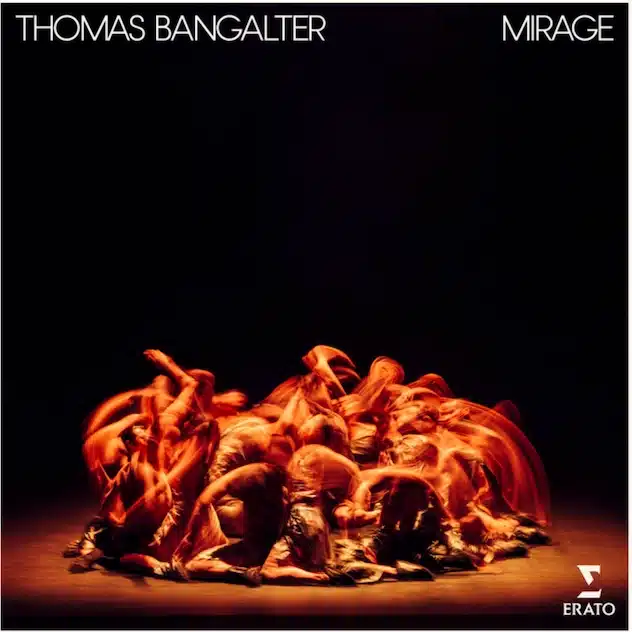
Five years after Daft Punk dissolved in a carefully staged farewell video, Thomas Bangalter continues proving that the more interesting story was never really about the robots. His new album, Mirage: Ballet For 16 Dancers, arrives July 5 on Warner Classics — an eight-track suite of electronic minimalism sculpted, quite literally, like architecture in sound. It is the logical next step in a solo career that has been quietly rewriting the rules of what a former pop-electronic legend can become.
The album doubles as the score for an eponymous 60-minute ballet, conceived alongside Belgian choreographer Damien Jalet and Japanese contemporary artist Kōhei Nawa. The production had its world premiere at Geneva’s Grand Théâtre de Genève last May and has since toured across Europe, accumulating critical attention that now demands a proper audio release. What began as a theatrical accompaniment has evolved, according to label Erato, into something capable of standing entirely on its own.
Xenakis Is in the Room
The name most conspicuously hovering over Mirage is Iannis Xenakis — the late Greek-French composer who pioneered the use of mathematical structures, stochastic processes, and architectural logic inside concert music. Bangalter openly cites him as a guiding influence, adopting what both he and his label describe as “a sculptural approach to sound.” That phrase is not mere promotional copy: Xenakis famously designed the Philips Pavilion at Expo 58, treating space and sound as inseparable materials. For Bangalter to position himself in that lineage signals not just aesthetic ambition but a deliberate philosophical stance — sound is matter, and matter can be shaped.
Listen to the teaser snippet already circulating online and the reference clicks into place. There is a wash of windchime-like tones layered over subtle, almost submerged IDM percussion — immersive, patient, spatially aware. Nothing here rushes toward a drop. Nothing here needs one.
A Discography Redrawn, Track by Track
It is worth mapping how quickly Bangalter’s post-Daft Punk output has accumulated. His debut solo album, Mythologies (2023), was an orchestral score for Angelin Preljocaj’s French ballet — as far from “Harder, Better, Faster, Stronger” as a career pivot can travel. That same year he composed music for Chiroptera Matière Première, a massive dance performance involving 154 dancers at the Paris Opera House, later documented on the Chiroptera soundtrack and in a full documentary. Now Mirage arrives as the third major compositional statement in three years — a pace that suggests not someone enjoying retirement, but someone finally freed to work exactly how he wants.
And yet he has not abandoned electronic culture entirely. His Alexandra Palace B2B set with Fred again.. — recently made available via Apple Music — reminded everyone that Bangalter behind a DJ setup remains a compelling proposition. A previous set alongside Busy P and Erol Alkan at the Centre Pompidou marked his first DJ appearance in 16 years. The man is threading between worlds deliberately, not erratically.
Art Basel and the Immersive Complement
On June 20 — roughly two weeks before Mirage lands on streaming platforms — Bangalter co-hosts Warehouse Artefacts at Art Basel in Basel, Switzerland. Presented by art.klub and produced by Nordstern Basel, the event pairs a DJ set from Keinemusik’s Rampa with visual art by Julian Charrière. The stated aim is a “sensory overload” aimed at the crossroads of music and fine art: effectively a live argument that everything Bangalter has been building since 2021 belongs in gallery and concert hall spaces as much as in clubs.
The timing is precise. Warehouse Artefacts previews the atmosphere; the album release consolidates it. Bangalter is not releasing records so much as constructing an ecosystem around a new artistic identity.
What Mirage Says About Where Pop-Electronic Music Can Go
It would be easy — and lazy — to read Bangalter’s solo trajectory as a rejection of his Daft Punk past. It is better understood as an excavation. The duo’s most underappreciated work always had a structural, almost cold precision beneath its crowd-pleasing surfaces. Mirage strips away the surfaces. What remains is the architecture.
For a generation of producers who grew up treating Daft Punk as the apex of electronic possibility, watching one half of that duo align himself with Xenakis and contemporary ballet is a genuine provocation. It suggests that the ceiling on where electronic composition can travel has barely been found. Bangalter is looking for it.
Mirage: Ballet For 16 Dancers releases July 5, 2026 via Warner Classics. Pre-orders are open now.
| Detail | Info |
|---|---|
| Artist | Thomas Bangalter |
| Album Title | Mirage: Ballet For 16 Dancers New |
| Release Date | July 5, 2026 |
| Label | Warner Classics |
| Format | 8-track LP (composed & performed entirely by Bangalter) |
| Tracklist | Mirage, Part. I · II · III · IV · V · VI · VII · VIII |
| Ballet Premiere | Grand Théâtre de Genève, May 2025 |
| Collaborators | Damien Jalet (choreographer) · Kōhei Nawa (visual artist) |
| Key Influence | Iannis Xenakis (stochastic / architectural composition) |
| Genre / Style | Electronic minimalism · Contemporary classical |
| Live Event | Warehouse Artefacts — Art Basel, June 20, 2026 (w/ Rampa & Julian Charrière) |
| Previous Solo Work | Mythologies (2023, orchestral) · Chiroptera (2024, soundtrack) |