

HIT CHANNEL EXCLUSIVE INTERVIEW: July 2026. We had the great honor to talk with a legendary drummer: Peter Erskine. He is most well-known as a member of Weather Report. He has also played with Jaco Pastorius, Steps Ahead, Stan Kenton, Joni Mitchell, Steely Dan, Kate Bush, Al Jarreau, John Abercrombie, Gary Barton, Chick Corea, Diana Krall and others. In 2007, Peter gave drum lessons to Neil Peart of Rush. His latest studio album, “Peregrine”, featuring Alan Pasqua (piano) and Scott Colley (double bass) was released in April 2026. Read below the very interesting things he told us:
How did you come up with the idea to record “Peregrine” in analog at Reelsounds Studio in Chicago?

What did Alan Pasqua (piano) and Scott Colley (double bass) contribute in “Peregrine”?
They provided me with the space to play my best because I didn’t have to worry about their level of competence. They are great players, so that frees me up. I can take chances phrasing-wise and my imagination can run free. Alan also contributed a couple of wonderful arrangements including a couple of pop tunes: Jimmy Webb’s “Wichita Lineman”, Brian Wilson’s “God Only Knows” and Phoebe Snow’s “Poetry Man”. So, Thodoris, I’d had the idea for a while of making a “jazz album” but playing some popular tunes. I’ve been listening to an Oliver Nelson album that I had when I was a child and it was called “Oliver Nelson Plays Michelle” (1966) and he does cover versions of The Beatles’ “Michelle” and “Yesterday”. Listening to those as an adult I just appreciated how sweet they are, how honest his readings were, so, I wanted to do the same thing. I just wanted to play this music honestly and in the way I know best. I was 70 years old when we made “Peregrine”, and I’m 72 now. I’ve finally figured out how to do that.
I really like the quietness of “On the Lake” from “Peregrine”. Please tell us everything we should know about this piece.
This piece has been recorded a few times. Its first appearance was on an ECM album (ed: “You Never Know” -1993), my first solo album for ECM. It turned out to be a fairly popular track. The label founder and producer Manfred Eicher was not very impressed or fond of the tune, but I insisted that we include it and I’m glad we did. So, Alan (ed: Pasqua -piano) is very comfortable with space, and he’s also comfortable with beauty without becoming too sentimental or calling too much attention to himself. In my original trio when we would play the tune, I would ask the musicians: “The solos don’t need to be great. The idea is that it’s a lake, there’s some mist on the lake, and we’re passing by the lake and seeing the mist”. That’s pretty much the story, there might be a little bit of something underneath the surface of the water, but it’s not The Titanic or something.

I suggested it to Alan: “It might be nice to do ‘God Only Knows’” and the other cover version that I had heard that was done many years ago, was by Gary McFarland and I said: “I think it would be nice if we did this”. Most of the jazz musicians I’ve worked with, are great Beatles fans: Jaco was a tremendous Beatles fan, Alan Pasqua is a big Beatles fan, I’m a big Beatles fan. Joe Zawinul (ed: Weather Report -keyboards) and Wayne Shorter (ed: Weather Report, Miles Davis -saxophone), I don’t think so much, but I think Tony Williams (ed: Miles Davis –drums) was very much also a Beatles fan.
Let’s go to “Vienna to Hollywood” (2025) album. How challenging was it for you to make jazz interpretations of these film scores on “Vienna to Hollywood” album?
Two of the most important composers in the history of film music that was composed and recorded in Los Angeles, were both from Vienna: Max Steiner and Erich Wolfgang Korngold. For many years even before I move to Los Angeles, I was a very big fan of the music of Steiner as well as Korngold. I’ve done covers of classical music in the past, I’ve done Mahler, William Walton, Peter Warlock, so, this is not a new idea, this was actually the second album dedicated to film music. I did one a few years ago with Alan Pasqua, Bob Mintzer (ed: Yellowjackets -saxophone) and Darek Oles, it was called: “Standards 2: Film Music” (2010), and we did a Steiner piece. I had actually previously arranged and recorded the main title music from “Gone with the Wind” (1939). So, 1, 2, 3, 4, 1 (ed: he sings) “Ba-baà ba-baaà, di-dí-fa/ Ba-baà ba-baà”, the symphonic thing and I did it: 1, 2, 3, 4, 1, 2, 3 (ed: he snaps his fingers while singing): “Ba-dàp ba-daaà, pit/ dívi-dítit, dit/ Ba-dúp pu-dút”, which kind of transforms the tune handily. It’s not too clever and it’s not disrespectful and that’s the fine line you walk when you adopt this music and particularly with Korngold, because Korngold has very ardent fans. They are very sensitive to his music being performed in any way other than how he intended it, but I think my affection and love for his music comes through, and I had a great partner in the pianist Danny Grissett, who is originally from Los Angeles but he now lives in Vienna. So, he and I split the arranging duties. I did one of the Korngold pieces in the style, voicings, and manner of George Shearing (ed: British jazz pianist), and I think it works quite nicely because otherwise the cue is too whimsical and cute to become a decent jazz song.
You watched Joe Zawinul (keyboards) playing a part of Korngold’s “Violin Concerto” during a Weather Report soundcheck many years ago. How much impact did that moment have on you then?
That had a big impact -the way he played that melody the first time I heard it. Then, a few years later I’m living in New York City, I come back late at night from a jazz gig and I hear this rousing work with violin and orchestra and the radio announcer said: “That was the ‘Violin Concerto’ by Korngold”, so, I wrote it down and went to bed and the next morning I saw the note and I said: “Yeah, that was a good piece of music”. So, I went to the record store, I found the album, I came back to my apartment and when I heard the middle movement, this beautiful melody, I almost fell off the couch. I thought: “Oh my God, this is the thing that Joe Zawinul was playing!” because it’s a very simple scale or melody, it’s impossible to forget. It was like all the dots connected, so, making this recording very much made sense. I’ve done other projects in Vienna that ‘ve been organized by the people at the Jam Lab Institute, it’s like the Berklee College of Music in Austria. We did a whole recording that never came out dedicated to music of Zawinul and Friedrich Gulda. So, Joe continues to play an oversized role in my life because of my work association with him and the things that I learned from him. I learned a lot of great lessons from Joe.

Well, I produced a trio recording with Kenny Werner (piano) and Darek Oles on bass and that came about pretty fantastic. I just finished touring not only with my trio, with Alan Pasqua and Darek, but I also did a lot of work with the pianist Fred Hersch and his longtime bass player, Drew Gress and that was really good for me. That was very challenging -not only because it was a very different kind of music to play, but also because I wasn’t the bandleader. There were a lot of things I didn’t have to think about; I could just concentrate on playing the drums… I’m involved with different film scores. I have some Disney film project coming up next week. A movie just came out: “Minions & Monsters”, a French animation and I did all the drumming on that. So, I’m still keeping a little bit busy in town. I mean, I’m coming to Europe every year for quite a few years. The last time I was in Greece was with Milcho Leviev (ed: Bulgarian pianist), that was quite a while ago (ed: in 2006). My plan is not to come to Europe in 2027, but to take a year off and then come back with fresh energy. Hopefully, by then, people will be even more interested in coming to the concerts, and it will be easier for promoters to book me. I forgot to mention my Dr. Um project, which is the electric band. We did a tour of Europe in October and Mike Mainieri was our special guest, the vibes player that I worked with for many years in Steps Ahead. So, we are going to Tokyo in a couple of weeks, and after the Tokyo concerts we will go to Taipei in Taiwan. So, a lot of good music this summer.
Did you have fun revisiting the Weather Report songs on Kurt Elling Celebrates Weather Report Tour last year?
Those were some good concerts; it was a lot of fun. It’s fun to revisit that music. A couple of tunes, I had to keep stopping them and I was saying: “Now, you guys, you are playing it wrong” and I apologized to Kurt but Kurt said: “That’s fine, no, it’s good. Let’s get it right”. He is a brilliant artist and he was a lot of fun to work with.
On your “Motion Poet” (1988) solo album, Vince Mendoza (Elvis Costello, Björk, Michael Brecker -conductor, arranger) wrote “A New Regalia” influenced by Frank Zappa’s “Peaches en Regalia” (from “Hot Rats” -1969). What’s the story behind this?
Vince has long been a fan and admirer of Frank Zappa. He’s probably one of the few people who understand exactly what Zappa was doing musically. So, “A New Regalia” was his tribute to “Peaches en Regalia”. It’s really nothing like it, but it’s a play on words as well as a tribute to Zappa.
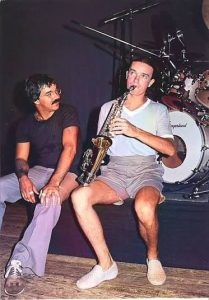
Could you describe to us your amazing chemistry you had with Jaco Pastorius (Weather Report -bass) as rhythm section?
You know, people often ask me, “What was it like to play with Jaco Pastorius?” And I recently said, “Let’s turn that around. What was it like for Jaco to play with me?” and by that I’m trying to answer: “Why did Jaco recommend me for Weather Report?” There were at least 10 drummers or maybe 100 drummers who would have been great, as the next drummer to follow Alex Acuña. But Jaco heard me playing and he recognized something in my B placement that instantly made him comfortable and he also saw that I could handle complex music like in a big band, like Maynard Ferguson’s: I had the power, the speed, the endurance, the energy but most of all I had the beat. I trace that back to an album by Wayne Cochran and the C.C. Riders, I band that Jaco played in. This was a recording that was made before he joined them, I was in college when it came out.
When Jaco finally became a member of Wayne Cochran and the C.C. Riders, the band’s drummer was still Allyn Robinson, who was from New Orleans. I heard that when I was 17 years old and I think that it had an influence on me: My 2 and 4 rhythm & blues or funk or fusion backbeat. It had the same kind of spacing quality. I mean, anybody can play beats -that’s simple. But it’s the space between the beats that makes each musician sound the way they do. I think Allyn’s influence led Jaco to instantly recognize “Here’s a guy who will be the perfect complement to what I want to do”. So, the first time we played together was like (ed: he snaps his fingers) instant. We were totally comfortable and of course, I had been listening to him as well as Weather Report for many years. I still had a lot to learn about recording as well as being a contributing improvising member of a band like Weather Report, but I came into that with a lot of strong ingredients. So, I got lucky, he heard me and he got me into the band.
Does Jaco’s “The Birthday Concert” (recorded in 1981, released in 1995) capture the true spirit of a Jaco solo concert?
The big band was a rather short-lived phenomenon, so “The Birthday Concert” was one of the earliest realizations of that, with Michael Brecker (ed: saxophone). Then, Michael left and his brother, Randy (ed: trumpet) took over. There is a live recording from Newport Jazz Festival in New York (ed: 06-23-1979) and the Japanese “Invitation” (ed: released in 1983) recordings, which were also released under the name “Twins 1 & 2”. Those are fairly representative. The problem I have with those recordings is that they were made when Jaco had started experiencing severe mental health issues. For those of us who had known him for a long time, it really threw us off balance. I just can hear that we weren’t nearly as centered or as comfortable, and I think the music sounded better when we were all feeling confident. There is some stuff on Youtube, though. There is a performance of the small group, the Word of Mouth Band in Toronto (ed: 07-02-1982) and that’s pretty representative of when that band sounded really good.
How emotional was it for you to write the liner notes of “The Birthday Concert”?
The original engineer, Peter Yianilos, along with Jaco’s manager at the time, a guy named Michael Knuckles, were the ones who were responsible for getting that recording made, but then tapes were languishing. I knew about those recordings. I had them on cassette, and after Jaco died, I started seeing one album after another being released from the period when he was living homeless on the streets of New York. I said: “This is not how his legacy should be presented. This is great stuff he did. Let’s get it out there”. I contacted the Warner Bros., they took the lead and they were rather aggressive in taking control of the tapes. It created a bit of a friction with Jaco’s remaining family members, but that’s all been sorted out over time. The album did very well, I think, for them. I produced the mixing of it, we mixed the whole thing in two very long days with the engineer James Farber and we took a very direct approach. I said: “I don’t want various reverbs and echoes”. Jaco liked to play with reverb, and we were just going to use a single plate reverb for everything, keeping it very clean and simple. I was there and having been intimately involved with getting this thing remixed, I felt I was in the excellent position to write about Jaco, the tracks and the musicians who played on them. I spent a fair amount of time on all that and it was something that was also very important to get right. The Weather Report Legacy Recordings that came from my tape machine, along with the photos I put online that occasionally get included in books and other publications, all stem from the fact that I was always interested in documenting what was going on at the time. So, I felt and I feel responsibility to get that stuff out there. And it’s not for money. I produced “The Birthday Concert”, I got no producer’s royalties or points. I got paid to remix it and that was pretty much the end of it. To be honest, it’s the same thing with the Weather Report thing, but my main interest was that the legacy be correct.

There is a nice photo of you, Jaco, Bobby Thomas Jr., Eric Clapton and Gary Brooker (Procol Harum -keyboards, vocals) in Helsinki in 1980. How did it come about?
We were in Helsinki rehearsing for the start of the tour and Clapton’s band was finishing the tour in Helsinki. We had the same booking agent, so, we were invited for an end-of-tour party at some hotel, so, we finished rehearsing and Jaco, Bobby Thomas and I went over to this hotel and joined this party. I was more excited to meet Gary than Clapton. I liked Blind Faith, but I was never a huge Clapton fan -probably even less so now. I just don’t like his politics. But Gary was a very gentle and interesting guy to talk to.
Gary Brooker showed you a pub trick.
Yes, he knew a pub trick. He instructed me to hold an empty glass and then he was several steps away from me, he had his back to me and he threw an ice cube over his shoulder and it landed perfectly in the glass. And he did it over and over. I asked him: “How did you learn to do this thing?” and he just said: “I spent a lot of time in pubs” (laughs). I imagine there were probably a lot of ice cubes on the floors of the pubs he visited over the years.
Was it a bit weird to give drum lessons to Neil Peart (Rush) in 2007?
No, not weird at all. At the time I was a professor at the University of Southern California and if someone comes to me and they wanna learn something, I’m happy to teach. He was a good student. I only talked about it publicly because he did. I’ve worked with some other drummers but I don’t want to talk about it because I’m like a doctor, I keep it confidential. Neil wanted to get some advice that would help liberate him in terms of how jazz drummers typically approach things, which was different from the way he approached them. I mean, I can never do what Neil did. I can never play a solo in an arena and keep 80.000 people interested or excited. He had that charisma and ability. He just wanted to learn a little more about some jazz things that he hadn’t had the chance to get into when he was younger. That’s all I showed him.
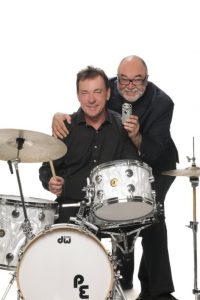
Do you have any memories of the Havana Jam in Cuba in 1979 with Weather Report?
Yeah, I mean, I took a lot of photos. It was wonderful to meet some of the musicians there, and I think my favorite new friend at the time was Rubén Blades -we’ve been friends ever since. We just got to talking and I was one of the few jazzers who recognized him and had listened to his singing before Cuba. I think my main memory of that is that I moved out to Los Angeles to join Weather Report and I was so busy trying to break into the L.A. scene, dealing with my girlfriend and all that, that I wasn’t practicing. So, when we played the concert, it was a little bit of a shock to my system. You’re just diving into such a high-energy thing after three months of not really spending much time with the instrument. Firstly, I felt that I had let the band down, and in these moments, that’s an opportunity for us to learn more -either about ourselves or about what we’re trying to do. So, it gave me a good lesson in the importance of practicing. That’s my main memory of Cuba. Also, there was a real disconnect between what seemed to be the idea of Havana Jam and the local authorities: they didn’t invite the general public; they invited political people. Most of them didn’t even come to the concert, and then they were frantically trying to get people to fill the hall. A lot of Cubans had very mixed feelings about the whole thing because, ideally, it was a wonderful opportunity. But, you know, as usual, politicians got in there and fucked it up.
By the way, did you like “Jaco” (2014) documentary?
There are two. There is the unofficial one (ed: “Jaco Pastorius – The Lost Tapes Documentary” -2021) on the Internet that has a very nice long encore with Joe Zawinul and then there is the one that Robert Trujillo (ed: Metallica -bass) did and I worked with Robert a bit on that. I thought they did a very good job. I talked to Robert after I saw it, and I told my wife -I told both of them: “I felt like I had spent an hour or two with my old friend.” I thought the use of the old footage was very well-done. It’s not easy to tell Jaco’s story. You’re either going to leave things out, or include too much of the parts that aren’t how he should be remembered. He was a brilliant musician, a great composer, and I think he had a rough childhood, with his parents getting divorced and having to live amid that friction. I feel sorry for children whose parents get divorced. I think it can make it much harder for a child to grow up with trust and confidence. I was very fortunate; my parents were really supportive and I had a fair measure of confidence about what I do and I hope that I’ve been able to provide the same for my children. My daughter (ed: Maya Erskine) is a very well known actress and our son (Ed: Taichi Erskine) is an editor, so, there are both in the film and television business here in Hollywood. On the phone (ed: it rang earlier during our conversation), that was actually my daughter who called, I’m gonna pick her up from the airport later.
Was it an interesting experience to tour with Steely Dan in 1993?
Yeah, it was fun. My kids enjoyed it. I treated it as a repertory gig. I didn’t want to try to impose my drum beats too much. It would be impossible to improve the drum beats that Jeff Porcaro, Jim Keltner, Bernard Purdie, Steve Gadd or Rick Marotta came up with. So, I could shape some of the solo things here and there. I think Walter Becker (bass, guitar, vocals) was responsible for getting me in there. He and I worked together quite a bit. Donald Fagen (vocals, keyboards) liked it. I think that first tour might have been the best band, in my opinion. We had Chris Potter, Bob Sheppard and Cornelius Bumpus on saxophones; Warren Bernhardt on keyboards; Bill Ware on vibes; Tom Barney on bass; Drew Zingg, who was an amazing guitarist; and me on drums. That was a good band.

Were Donald Fagen and Walter Becker easy-going persons to work with?
Walter was quite easy going, Fagen was moody. They were fine. I mean, Donald had more notes for me than Walter did. Donald wasn’t 100% satisfied with the way I did it, that’s why I got fired eventually. Then, they hired Dennis Chambers and then Dennis got fired and they hired Ricky Lawson and then eventually they ended up with Keith Carlock. I think Keith is the perfect drummer for Donald Fagen: He is exciting, he is flashy, he is unorthodox and he brings enough voodoo. As I mentioned, I wasn’t interested in trying to do that; I was more interested in trying to be faithful in the recreation of those tracks. I had a bass drum that was only 14 inches deep, the drum set was quite typical of what of a drummer might have played on their recordings. So, my approach was that and whatever Donald said, it didn’t really change it fundamentally. That’s how I wanted to do it and he wanted something else, so, then they got Dennis and I was out of the picture. They did bring me back in 1995, I did a few more gigs including the David Letterman performance of “Josie”. They brought me back to do these concerts in New York and also that TV show.
How much has your approach to drums changed over the years?
It’s a constant evolutionary process. I think I’m playing better now than I ever have because I respect and trust the music so much more. I also understand a lot more about tone and about the psychology of playing with other musicians. A few years ago, someone asked me the same question, and I answered: “When I was young, I was playing as if my whole life depended on it. Now I play as if other people’s lives depend on it”. I thought that was a clever answer. But the goal is to keep improving in life and I’m still able to do that, so drumming is still interesting. I think that if I ever feel like I’ve stopped learning and I’m no longer improving, then it won’t be interesting to do anymore.
How helpful was the period you went at the Stan Kenton Music Camp to your later career?
It was the start; I met many musicians. The first camp I attended, I didn’t know them at the time, but it included other young musicians like Keith Jarrett (piano), Randy Brecker, David Sanborn (saxophone), Don Grolnick (piano), Lou Marini Jr. (saxophone). So, I was very lucky, I got into the music education system at a wonderful moment. I was still able to tour with big bands when I as old enough to do that (18). That was the doorway to having a career, being a jazz musician. I got to do studio recording and touring. I was maybe a few years late compared to some of my older colleagues, but I got a good taste of all these different things. The camp was crucial because, at the time, jazz education in schools was pretty rare and hard to come by. So, every summer I got my jazz fix and I was able to learn from some of the best musicians in the world.
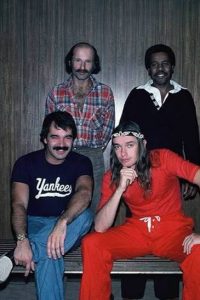 Ron Carter (Miles Davis Quintet -double bass) told me three years ago that the first take in the studio is always the best, because the first time you play the music, the second time you play yourself. Do you agree with this?
Yeah, I think Ron was right. He is such a great musician. The first take with Ron is so great that you’d be a fool not to use it, because it’s the most honest. Often, what happens is that you either play yourself or imitate what you did on the first take. You are aware of it, you are thinking: “Ok, I’ll fix this or that”. Sometimes, the second take is good. “Ok, that’s what the music is doing”. I don’t always get it right the first time, especially if it’s a new piece of music. Ron Carter probably has been on more recordings than any other musician that I can think of and he always sounds great. I never heard him sound bad.
Tony Williams (drums) came from Boston and joined Miles Davis when he was 17 years old. Are there those kinds of opportunities nowadays?
Unless there’s another Miles Davis out there, I’m not sure. The young musicians today are incredible. They can play stuff that we couldn’t even imagine when we were their age. So, we are doing something right in terms of education and media. People can get their hands on all kinds of music to listen to and learn from, but it’s a very different world: Jazz bands back then played 50 weeks a year, six or seven nights a week, maybe three sets a night, often times opposite other great bands. So, the level of playing was super high, and now you’re doing maybe a dozen jazz gigs -or twenty or thirty- compared to 300.You can’t match what that amount of playing time and experience did for those musicians. So, jazz musicians are at a disadvantage, we just can’t make a living playing jazz all year long. I have to go and play drums on movies like “La La Land” (2016) or whatever. I write books, I was teaching at university. We have to wear different hats to make a living and I learn every time I put on different hats. I’m not complaining but it’s just a different reality. Now, with AI and everything else I have no idea what the music industry would be like. There is a big debate going on now about “Should students go to college?” I think they should. I think the university is important not just for what you learn about music, but for what you learn about life and about the process of learning itself: Being able to sit down, read a book and take something from it, or sit down, read instructions and understand what they’re telling you. We have to be careful that they won’t allow us to slip into a post-literate world, but you won’t want to talk about that.
Was there any kind of competition in the ‘70s and ‘80s between you and drummers like Steve Gadd (Eric Clapton, Steely Dan) and Jeff Porcaro (Toto, Steely Dan) ?
No. I mean, I think I met Steve when I was 15 and I just looked up to him. I met Jeff when I was in Maynard Ferguson’s band. His father was one of the nicest men I’ve ever worked with or ever met. Both Jeff and Steve’s playing was so good. I actually cried listening to an album that Jeff was on (ed: he refers to the song “That’s Why” from Michael McDonald’s “If That’s What It Takes” -1982). In part, I cried because his playing was so perfect and in part I cried because I realized I will never be able to do what he does. So, having to surrender part of my identity was, eventually, quite liberating. But I was holding on to the idea that I could be the best drummer in every style of music. Then, thanks to Jeff and later on also Steve, I realized: “No, I can’t -and that’s not the point”. Is there a big prize that you win at the end of your life for playing everything? I don’t think so…!

“Blue” Lou Marini (Blues Brothers, Eric Clapton, Levon Helm -saxophone) told me that he and Lew Soloff (Blood, Sweat & Tears -trumpet) were like mindreaders together: They would play the same thing right at the same time or they would be reading a part and every time that they’d play it for 100 times in a row, they would play this note short and then suddenly one night they would both play the note wrong. Had you ever experienced the same with a musician you played together?
Yeah, I’m trying to experience that every night with different players. But it’s not magic, it’s just listening. If you are really listening to what someone is telling you, you can finish their sentence. If you are not really listening and you just want to add you own finish, no matter what they say, then it’s not quite in tune. So, yes, some musicians we have a real natural chemistry and Soloff was one of a kind. He was really great. With all the musicians I’m currently working with, I feel that way. Whether it’s telepathic or not, most of the time we’re sending out subtle little signals. It really comes down to the art of listening, I think.
A huge “THANK YOU” to Mr. Peter Erskine for his time.
Official Peter Erskine website: https://www.petererskine.com/
Office Peter Erskine Facebook page: https://www.facebook.com/PeterErskineDrummer/