

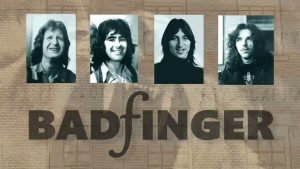
HIT CHANNEL EXCLUSIVE INTERVIEW: March 2026. We had the great honour to talk with an extremely talented musician: Bob Jackson. He is most well-known as member of Badfinger, recording “Head First” album with them in 1974. He was also a founding member of Indian Summer, an excellent progressive rock band that released one album (“Indian Summer” -1971) and shared the same management with Black Sabbath, when they were still called Earth. He has also played with Ross, The Byron Band (led by David Byron, the singer of Uriah Heep), Pete Brown, Jeff Beck, Jack Bruce, The Fortunes, The Searchers and Moon. In December 2024, Badfinger officially released “Head First” album for the first time, 50 years after its original recording. You can order the album on https://badfingeruk.bandcamp.com/album/head-first . Read below the very interesting things he told us:
The 50th Anniversary Edition of Badfinger’s “Head First” album is its first proper release. Are you satisfied with the feedback you have received so far for it?
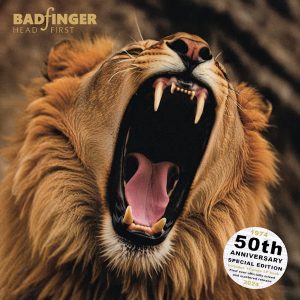 Yeah, I think we’ve been very lucky, the feedback has been very-very good. I think that is what it was always needed with the album, but, as you probably know, it wasn’t until recently that we managed to get hold of the master recordings. So, once I got hold of those, I could take charge and then with a partner (ed: Andy Nixon) we mixed and mastered it freshly. So, yes, we had very good reactions and I’m very happy.
I know “Head First” had a very long and very sad story. Would you like to tell us some basic information about the recording process of it in 1974 and the aftermath?
Yes, we recorded this album at Apple Studios (ed: owned by The Beatles) and it was a strange situation: We had been told to go into the studio to make another album by our manager (ed: Stan Polley), an American manager that we had and we really weren’t sure why, because it wasn’t time to make another album into the record contract, but he insisted and he sent us into Apple and he only booked 11 days, which is a relatively short time to do a whole album. Anyway, I got together with the guys and we wrote all new material for it and we recorded it, but the strange thing about it was, our misgivings about why we were doing it were correct; we were suspicious. The money was paid by the record company to an interim escrow account -it means a good faith account where the money is shown to be there but you are not supposed to take it yet-, but as soon as that money went in that account, our manager just stole it, basically. The outcome of that was that the record company, Warner, said: “Wait a minute, we are calling the whole contract off” and that left us as band wondering: “What we do?” It was a very unfortunate thing, really. We recorded the album but of course the record company said: “We are cancelling the contract”, so, album never ever came out. For a long, long time after that, decades, there was a lot of confusion about who actually owned this album because the record company said they didn’t want it. We were sued by our record company and the manager was also sued, so, the whole thing just fell apart. And of course, the really bad news was that it got so depressing that our guitarist Pete Ham got so down and depressed about -because all money stopped, everything stopped- that he committed suicide (ed: in 1975). It was very sad. So, for decades and decades this album just was going nowhere and no one could find the tapes, no one could find any documentation about it, but finally I found it, about a year and a half ago or something like that and managed to get it out. So, that’s a brief breakdown of what happened.
What’s the difference between the 50th Anniversary Edition of “Head First” and the 2000 one?
In 2000 I did a deal with Snapper Records. I took a chance because I thought: “This album is never gonna come out”, so we had some 2-track tapes, it wasn’t the multi-tracks, it was just 2-track demo recordings that the engineer at Apple had recorded for us just to listen to as a band when we left the studio back in ’74. So, I did a deal to get these songs out and of course the quality wasn’t great but I thought: “They are never gonna come out. I’ve got to do something”. I managed to get them out but of course, I didn’t produce them, I didn’t mix them, it was given to someone else to do, so, that was very confusing. As it happens, the album was well-received even then, even though the audio quality wasn’t really the best. But that caused a big confusion: Warner Bros. again stepped in and said: “We claim that we own these tapes” and I said: “Oh no, come on, you didn’t pay the advance, you rejected the album. You don’t own the tapes”. I managed to get round to it and eventually, yes, we got that album out in 2000. But this time round, a year and half or two years ago, of course, I managed to trace the tapes and you know Warner Bros. Records had them all along. They said they didn’t, for a long time, but they did and they agreed to let me have them. So, I was so pleased, I managed to get them home here in the UK and mixed and produced them. So, this is far superior to that Snapper version.
 I really like your song “Moonshine” from “Head First”. How did it come about?
Thank you. We were quite in a rush to record all these songs because the manager had not given us hardly any notice to do the album, but that was one of the songs that we came up with. Mike Gibbins, the drummer, he had the first sequence and didn’t really know what else to do with it, so, he gave it to me and Tommy Evans, the bass player (ed: he committed suicide in 1983) and we messed around a little bit and we added two other sections. So, it’s co-written. It’s myself, Mike Gibbins, the drummer and Tommy Evans, the bass player. Yes, it’s got a nice mood about it, Pete (ed: Ham) played some very nice slide guitar on it. Well, I’m pleased you liked it.
Was Pete Ham’s (vocals, guitar, piano) suicide in 1975 a big shock for you?
Oh, massive shock, yeah! It’s true to say that we were all going through a depression, if you want, because our career looked like it was stalled, it looked like it ended. No record company, our management were crooks, so, we couldn’t get the money out of them. We went around to various other managers in London and said: “Could you help us?” and they said: “Look, you are a great band but once you get out of all your legal difficulties, then come to us”. Well, of course, we were in no position, we didn’t know what to do. So, when Pete died we were all very depressed and down, but I didn’t expect that, no. Pete asked me to stop. I stopped just a week before he died, I spent some time with him. No, I didn’t see that coming. It was a terrible shock.
When did you become aware of Stan Polley’s (Badfinger manager) mismanagement?
We were suspicious for some time, even before going into do that “Head First” album in Apple. But the big thing was when he sent us into do the album we said: “There isn’t another one due” and then of course when he stole that money, we tried to get hold of him; we were on the phone, Pete particularly, the guitarist, he was trying to ring him up and the phone was dead or someone would say: “Oh, he isn’t here at the moment”. So, we knew then that “this is bad, this is really bad” and then we realised that he actually stole it from this account, we didn’t know that at first, but Warner Bros. told us. They said: “We are finishing the contract, your manager stole this money and that’s the end”. So, it was a terrible shock to lose both friends and the business, it was awful. Awful.
Are there any touring plans with Badfinger?
Not, at the moment, although never say never. I’d like to think that I will do some more stuff live. For a while, I had a band going but because of some illness that I had at the time, I had to stop, that was unfortunate, but yeah, I would like to think so. I would like to think we will do something again.
By the way, did the other guys in Badfinger believe that Pink Floyd stole their “Wish You Were Here” title? [Badfinger released their “Wish You Were Here” album in 1974 and Pink Floyd in 1975]
Yeah, we did. We talked about that. We don’t know the truth. We often thought: “Yeah, we were there first” (laughs).
 Are you proud that “Indian Summer” (1971) is considered a cult album?
Yeah, I am and I’m very surprised to be honest, because at the time we were around in ’70-’71 playing, we didn’t do that well. I mean, we used to go down great on gigs, but the album didn’t particularly sell great. We were with Black Sabbath’s management at that point and Sabbath went like this (ed: he shows a high point during our Zoom meeting) and we went like that (ed: he shows a low point). Yeah, I ‘m very surprised that it’s got a good reputation. Funnily enough, just yesterday I was in London and I went to Trident Studios where we recorded that album. I did a little tour around, we knew the people that ran it. So, I went in that studio just yesterday for the first time since 1971 and that brought back a lot of memories, that was fantastic, yeah. It’s nice that everyone likes it, that’s great.
Why weren’t you satisfied with Rodger Bain’s (Black Sabbath’s producer on their first three albums) production on the “Indian Summer” album?
I’m not sure whether it was just the production or it was the mastering process, where they actually prepare the finished mix for cutting into the vinyl, but to me, it was very flat sounding and it wasn’t very loud compared with other albums. So, we always thought: “Yeah, it could have been so much better, you know”. But we weren’t there for the mixing, we weren’t invited. It was our first album, so, we weren’t invited to take part in all that. It isn’t that I hate it, I think it’s ok, I’m just thinking it could have been so much better in terms of volume and audio quality.
Please tell us everything we should know about the song “God Is the Dog” from “Indian Summer” album.
(Laughs) Well, how long have you got? We were right at the start of the progressive music era, so, the idea was to produce music that was unusual, unique and lyrically would make people think, not just like a pop song. “God Is the Dog” was about opposites: Whatever is the highest, there is always an opposing lowest, if you know what I mean. The good and the bad. That’s the end of the line message of it. Yeah, it’s a bit of what we call an “esoteric” lyric. I have a lot of people ask me about that and in a way, I couldn’t go line by line explaining each line; it came out as poetry first, really. That’s where it started before the music.
 What’s the story behind “Another Tree Will Grow”, the final song of the “Indian Summer” album?
Well, that’s another song that is about opposites. Part of the lyric there is: “Opposites are equals, life is full of sequels”. That was saying that nothing ever really dies, nothing goes away, it just changes. As we know in science, you can’t destroy energy, it just transforms into something else. I guess it was really about the idea of reincarnation: When one thing dies, another thing will come about. So, that’s the brief story of that (laughs).
Do you think internet downloading made the music of Indian Summer available to a broader audience?
That’s a very good question, Theo. I’ve never really thought about that, but I guess you are right, I think it did, because we didn’t sell lots and lots of albums back in ’71 and there was no plan to do any more after that, so, I guess, without streaming and the internet people wouldn’t have even heard it probably. I think you’ve got a point. I think it has helped the music last and spread.
Who were your influences when you formed Indian Summer?
I have a lot of influences. The music scene in England was really good in the late ‘60s and the early ‘70s and I used to go and see a lot of bands, maybe some bands you would haven’t heard of. Obviously, you would have heard of people like Fleetwood Mac and Pink Floyd and I saw a lot of those acts in very small venues, small clubs, not big stadiums and I got very influenced by being close to the music. Some of the people that really influenced me was: Stevie Winwood (ed: Traffic, Blind Faith -vocals, Hammond, guitar) and Traffic and I liked The Spencer Davis Group that he was in before that, so, that was a big influence. Hendrix, believe it or not, was a big influence. Although you probably wouldn’t tell from the music but lyrically he was a big influence, I like Hendrix a lot. Arthur Brown and his keyboard player, Vincent Crane (ed: he later formed Atomic Rooster). That keyboard was just unbelievable. There was a jazz organist years ago called Jimmy Smith, an American guy and I always thought that Vincent Crane was like Jimmy Smith on steroids (laughs). He was like a super version of Jimmy Smith. Who else? There was a band called Family that came from Leicestershire, I saw them many times and again musically I really loved what they were doing. The truth is that there are a lot of influences but the great thing was, as I said, then the scene was such that you could see these acts very-very close up. You weren’t watching in a big stadium, it was just in a club and I used to go all the time to see this music. Yes, other bands definitely influenced me.
 What was your reaction when you saw the “Indian Summer” album cover for the first time? It’s very unusual for a British band.
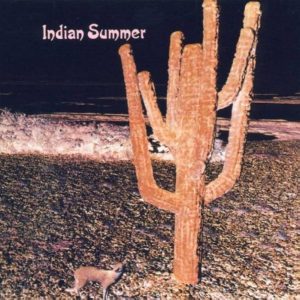
It is very unusual. The album cover designer was a guy called Keef (ed: Marcus Keef, real name Keith Macmillan) and he had done the “Black Sabbath” (1970) cover before (ed: he also did “Paranoid” and “Vol. 3”), it was a little bit kitsch, I would describe it as. He took a part of a lyric where I talked about a fox as being an ever-present symbol of evil and he got this fox looking up at this cactus (crazy laughs) and I must admit that when I looked at it for the first time I said: “What’s all about?!” Then, I realised that he had taken a part of the lyric from one of the songs about a fox and he just played around with it. I mean, we didn’t dislike it but we were a bit surprised thinking: “Alright, why is it looking at the cactus?” I never got to the bottom of that, you had to ask Keef. But yeah, he did the job, it was surreal, I guess, which matched the mood of the music.
What memories do you have from the Indian Summer tours with Black Sabbath when they were still called Earth?
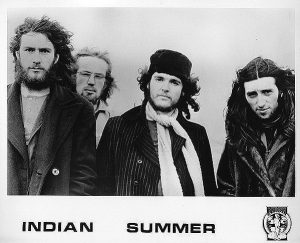
Well, we used to know the guys really well and in fact I can tell you, the manager (ed: Jim Simpson), that managed both of us, on occasion, he would say to us: “Look, go along to this gig and play but don’t say you are Indian Summer. Say you are Earth or Black Sabbath” and we asked: “Why?” and he said: “Because they can’t make it, something has come up. Their van broke down or something, but don’t tell them who you are (laughs), just go and play because no one will know”. So, there were a few gigs that we did like that. As guys, they were very lovely guys, very down to earth, really easy-going, not show biz at all. I went round to Ozzy’s house a few times. Yes, they were just regular guys. You would ‘ve never guessed that they would ‘ve got as big as they did. In fact, I asked Ozzy: “What do you think of your manager? He has asked us to sign with him” and Ozzy said: “Yes, sign with him. It will be great”. Then, we got a message from Ozzy: “Come over and see me”. So, we went over to Birmingham, myself and the bass player (ed: Malcolm Harker), I think and we went in his house and we said: “What’s the news?” and he said: “Don’t sign with that manager” and we said: “But, Ozzy, you told us to sign with him” and he said: “I know, but we are off to someone else now. We’ve got a new manager. Don’t bother with that”. I said: “Oh my goodness, we just signed” (laughs).
Was Ozzy Osbourne back then, as crazy as people think of him later?
No, he wasn’t. I think that came on with all the alcohol and drugs later, but when we knew them, they were pretty straight as guys. They were really normal (laughs). I’ve got some really good memories from them, it was nice to hang around with those guys.
 Did you expect that Black Sabbath would become so popular?
No, I didn’t because there were a lot of bands around. The biggest thing that separated Sabbath from all the other bands playing clubs was the volume. The volume that they played at was just massive, but other than that, I thought: “They do that kind of satanic lyrics and stuff. Can that really catch on mainstream?” Well, how wrong was I. Because it did, they got on really big. Although they put that image on, they were very normal guys.
Do you consider yourself a songwriter, a singer, a keyboardist or a guitarist?
That’s a good question. Well, all of them really, but I guess a keyboard player and a writer, most of all. I think that’s my main love, but of course, I also love singing and playing guitar, but I would say the songwriting and keyboard playing.
How long did you play with John Entwistle (The Who -bass) ?
Well, actually, I never did play with John Entwistle. That’s something that is wrong on Wikipedia. What happened was, I was asked to join a band in London who did play with John Entwistle and when I joined I was told that we were rehearsing to play with John, so, they said: “Let’s start rehearsing” and about two weeks in, the guitarist, a guy called Alan Ross said to me: “By the way, we’ve got a tour coming up all alone” and I said: “What happened to the John Entwistle connection? I thought we were backing him. You did back him”. He said: “I know, something happened and we are not doing it anymore” and I said (ed: disappointed) : “How’s life? Oh, God”. But happily, this guitarist, managed to get a deal with the Robert Stigwood Organisation, RSO (ed: Cream, Eric Clapton, Bee Gees management), so, there was something to go on to. But that’s a mistake, a fallacy, I never actually played with John Entwistle (laughs).
Was it an interesting experience to support Eric Clapton with Ross in venues such as Madison Square Garden?
Yeah, that was fantastic. We were pretty young and naïve as a band and I had never done anything on kind of that scale before. We were lucky in that Clapton and the band, they just mixed with us or they let us mixed with them, so, we stayed in the same hotels, we ate in the same restaurant when they ate. I’ll tell you what, this is a little story, they hired Elvis’ plane for everyone to tour around America. Again, we just joined in, we were with them, so, everything that the Clapton band did, we were included. It was a wonderful experience. Looking back, I don’t think we knew how lucky we really were, you know what I mean. Yeah, it was fantastic, they were huge crowds. Amazing!
 Did you get to know Eric Clapton when you supported him with Ross?
Yeah, reasonably well. I often sat on the plane with him. No one would stick to a seat. You‘d get in and you sit wherever you find an available seat. I sat with him a few times and chatted. Again, he seemed quite down to earth and easy to talk to. You’d be surprised, so many of these people you think they would be very star-like, with huge egos, but no, he seemed fine, just another guy (laughs).
What was it like to play on “On the Rocks” (1981) album with The Byron Band (David Byron -Uriah Heep singer)?
Yes, that was something else that I got involved with. I got a phone call one day: “Would you like to come down to the south of England where David lives?” and I hadn’t met him before, but they must have heard about me. Anyway, I went down and I just did a quick audition, but within about 10 minutes they said: “Yeah, you’ve got the gig”. So, I ended up stopping with him because I live in the Midlands, in a place called Coventry, near Birmingham and he and the band were all based in London. So, I ended up going down and stopping with David a lot of the time. He was a quite complex character, he was a big-big drinker, but he was a lot of fun and a very confident guy. Yeah, I had some good times in that band, as well, doing live gigs at all sorts of places and of course the album itself.
Was David Byron an easy-going person to work with?
Yes, he was, but he was definitely the leader of the band (laughs). I mean, it wasn’t like a democratic “let’s all decide what we are gonna do”. David set the schedule and the kind of music and blah, blah, blah. So, he was easy to get on with, I liked him and got on well with him, but he was definitely the boss.
 What memories do you have from your conversation with Jeff Beck once in a pub near Decca Studios in London?
Well, that was funny, that was weird. I played with a guy called Pete Brown, who was a poet in London and Pete Brown wrote with Jack Bruce (ed: Cream -bass, vocals) a lot of that Cream material like “Sunshine of Your Love” and many-many other things and he invited me down to do a session; he didn’t tell me who was on the session and what it was about. I went down with the drummer, Tony (ed: Fernandez), from the Ross band. We went to the pub around the corner from Decca Studios and Tony and I saw Jeff Beck. I didn’t know him and neither did Tony, but Tony said (ed: he whispers) : “That’s Jeff Beck over there”. So, we went over, started up a conversation. We said: “We are working on the corner but we love your work” and he said: “I’m working around the corner as well” and we said: “Alright, ok”. So, we just chatted and said “goodbye”. We later went to the studio and he was playing on the same session! So, we met him in the pub and now realised that we were gonna be playing together. I mean, it was just unbelievable, really. Yes, that was quite exciting. There was another keyboard player, Max Middleton, who is a fantastic player, he played with Beck in many of his other bands. Jack Bruce was there, too. It was unbelievable, really.
Did you enjoy the sessions for Graham Bond and Peter Brown’s song “Spend My Nights in Armour” (from “Two Heads Are Better Than One” -1972) featuring Jeff Beck and Jack Bruce (Cream -bass, vocals)?
I never got a copy of the album but I think that’s what it was. It’s amazing how things can happen in life: You just don’t expect them (laughs). But yes, that was another very happy thing.
How difficult was it for you to trust people because of the troubles Badfinger had in the music industry?
The short answer is: “Very difficult”. I went into real depression when Pete Ham died and stopped working, in fact. It was almost like having a nervous breakdown. I mean, it really affected me badly. Yes, it has affected my attitude ever since, really, I’m very suspicious. When it comes to signing any contract, I am super-super careful. I always go down to the Musicians’ Union and pass anything that is gonna be signed. It does changes your mentality when you lose someone like that. And of course, as you may know, some years later (ed: in 1983), Tommy Evans too, committed suicide, because of business problems in Badfinger. So, those things don’t go away when you lose friends under those tragic circumstances. It toughened me up a bit, I think.
I believe Pete Ham was one of the greatest songwriters of all time, in the same league as Bob Dylan, John Lennon, Neil Young, Roger Waters and John Fogerty. Do you agree with this?
I absolutely agree. Don’t forget, he died when he was 27 and before that he had so much material. A lot of those old demos that he did, are now coming out on a record label called Y & T in America and he wrote so much stuff and the styles are so varied. Some are country picking things, others are quite heavy things, others are ballads. Yeah, he was such an adept musician, so talented. It’s such a shame, he had a long way to go, if it wasn’t for the fact that he got so depressed and couldn’t see where the next penny was coming from. It’s one of the great tragedies I think that he died so young. He was brilliant.
Who was the nicest person you have ever met?
There have been a few, but I would say Pete Ham and Tommy Evans would be right at the top. They were good friends and I got very-very close to them. So, I suppose those two were pretty special. I guess they would be really right at the top of my list. Of course, I’ve got friends outside of the business that I know, love and trust, but in the business you can’t always be sure of people (laughs), but Pete and Tommy yeah, I’ve got a great affinity with them.
Did have a good time the period you played with The Fortunes?
Yeah, I was with The Fortunes for 13 years. It was a different kind of market that we were playing for, a more commercial market, but it was regular work. On the British Oldies circuit, which is people like The Troggs or The Searchers or Herman’s Hermits or whatever it is, I think we were considered one of the most professional acts as The Fortunes. We had the respect of most of the other bands. So, yeah, I did enjoy my time and I think we produced some good stuff and we worked well as a band.
Are you a supporter of Coventry City F.C.?
(Crazy laughs) Theo, I’m sorry to disappoint you, I’m not into football at all. So, no.
Did you get to meet any of The Beatles members when you were at Apple Studios?
No, I didn’t. The nearest I got to Paul McCartney was when my daughter, who is also a musician, by the way, she went to a place called The Liverpool Institute for the Performing Acts, it’s called LIPA, and this is the school that Lennon and McCartney went to. My daughter did a music degree there and she got her certificate from Paul McCartney, so, I was there in the audience and he walked past with my daughter, so, that was the closest I ever got to a Beatle (laughs). So, she has talked to him, I didn’t.
Do you believe that popular music in the ‘60s and ‘70s was much better than today’s music?
I do. I think anyone who lived through the ‘60s-‘70s era, we were very lucky people because it was an explosion of talent with everyone not copying anyone else, everyone wanted to be original, do something fresh. Of course, the hippie movement as well. The world, we thought, it was changing. There was an explosion of art and music, a social revolution, a youth revolution where youth started get its own fashion, clothes, magazines. When I think of my parents and people before, they didn’t have anything like that. So, I do believe that the ‘60s and ‘70s were a very-very special time in culture. I think there was a lot going on that. In a sense, you might say nowadays a lot of directions that they’ve been taking, they are all done (laughs). So, now people tend to concentrate on just dance or rhythm and stuff. I think there was a greater sense of melody in those days than there is now.
A huge “THANK YOU” to Mr. Bob Jackson for his time.
Official Badfinger website: https://badfingeruk.com/home
Official Badfinger Bandcamp site: https://badfingeruk.bandcamp.com/album/head-first
Official Badfinger Facebook page: https://www.facebook.com/BadfingerOfficial