

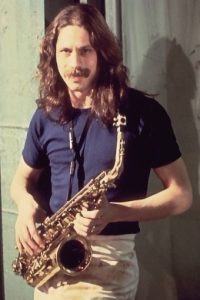
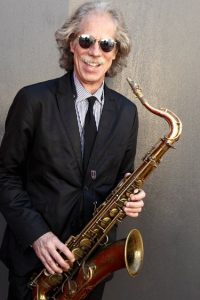
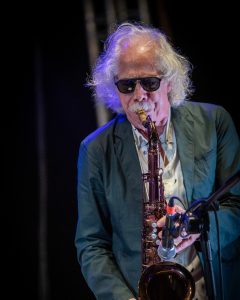
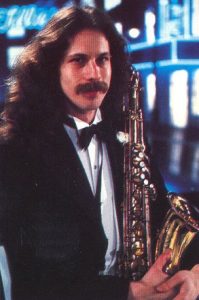
HIT CHANNEL EXCLUSIVE INTERVIEW: December 2025. We had the great honor to talk with a legendary saxophonist: “Blue” Lou Marini. He is most well-known as a founding member of The Blues Brothers, appearing in both films. He has also been a member of Blood, Sweat & Tears and the Saturday Night Live house band and has collaborated with Frank Zappa, Eric Clapton, Levon Helm, Steely Dan, Aerosmith, James Taylor, Aretha Franklin, John Tropea, Dr. John, Maureen McGovern and many others. In 2025 he released three studio albums: “Out of the Blue” as Blue Lou Marini and Bluband, “We Like to Groove!” in collaboration with Lluís Coloma and “Point of View” in collaboration with Steven Feifke. Read below the very interesting things he told us:

It started right before the pandemic, I wrote the composition that’s on the record called “Klong” for a college band in Missouri; a friend of mine, named Jim Widner, was the conductor. That was the first new composition I had written in some time, so, that inspired me and then the pandemic happened and during the pandemic I just couldn’t stop writing; basically, I wrote all the rest of the music during that period. Many of my big band compositions before “Out of the Blue” were written with the idea that a college jazz band would play them. So, when I started working on the music for “Out of the Blue”, I decided one significant thing which was that I was gonna write with my New York musician colleagues, rather than tamping down the music in difficulty or worrying about whether a college band could play it. So, I wrote it with my New York friends in mind and when I put the band together I wanted to have a band that had a mixture of musicians in it, and one of the first people I thought was Buddy Williams (Saturday Night Live, Grover Washington Jr., McCoy Tyner), the drummer, who has long been one of my favorite musicians in New York or in the world, for that matter.
Then, Tom Barney (Miles Davis, Steely Dan), the bass player, because we used to have a band back in the late ’70 and early ‘80s called Band Together and that was the great jazz piano player Larry Willis (Blood, Sweat & Tears), Buddy, Tom Barney and Lew Soloff (Blood, Sweat & Tears), my dearly departed great trumpet-playing friend. So, we were all very familiar with each other. Then, my dearest friend, Joe Randazzo, the bass trombone player, he died before we could do the album, but he was instrumental in helping me get the band together. He had been playing in a lot of rehearsal bands in New York, so, he knew a lot of young players: The alto saxophone player, Andrew Gould; the tenor saxophone player, Sam Dillon and the younger musicians were recommended by Joe. That’s the way I put the band together. Once we saw that we could do it, we were rehearsing and everybody was very enthusiastic, I arranged for Jay Messina, the great engineer, who has engineered Aerosmith and all kinds of famous bands (ed: Kiss, Cheap Trick), his list of credits is enormous, he’s a close friend, so, we were thinking about doing it old style, live, without headphones and that’s the way we recorded it.
But it turned out to be much more difficult than I had imagined. For one thing, in the days when the musicians were recording like that, they were also recording every day, multiple times a day, that was in the ‘50s, ‘60s and ‘70s when we were busy in the studios all the time and we were used to play all the time. So, nobody had done a session without earphones for a long time and just in that context when you are recording like that, you can’t isolate and overdub any mistake. You either have to go back or splice it from another take, you know. We didn’t have to do much of that, but we did some. So, it was harder than I thought, but I’m really happy with the results of it. I always prefer live music, live recordings, to me, it captures the essence of the music more. A lot of the tunes on the CD are one take, our first or second takes. We didn’t do a lot of multiple takes.

All of a sudden, I have a wonderful CD out, it came out in May, it’s called “We Like to Groove!” and it’s a collaboration with a boogie-woogie piano player named Lluís Coloma, he is from Barcelona in Spain. I met him a few years ago when we played some concerts together and then we decided to do a CD project together and it’s really fun. It’s very highly energetic and it’s got a great young guitar player named Kid Carlos, who is terrific and upright bass (ed: Manolo Germán) and drums (ed: Arnau Julià) and Lluís, he is fantastic, he plays great! So, I’m really happy with that. That was funny because it was a year ago, we recorded that in October 2024. We did three days of rehearsal, three days playing at the famous Café Central in Madrid and then, three days of recording. So, I had nine straight days of all day long playing with the boogie-woogie guys. Then, we flew home to New York on a Monday and on Thursday I went into the studio with a brilliant young piano player named Steven Feifke. He won a Grammy in 2023 for big band composition (ed: “Grammy Award for The Best Large Jazz Ensemble Album”). We went into Yamaha Studios in New York with a trio, a great drummer named Jimmy Macbride and a wonderful bass player named Raviv Markowitz and we recorded in four hours, we did a record of two of my compositions and four or five of Steven’s. So, I went from playing boogie-woogie and sort of bluesy kind of stuff to complex jazz tunes where I was having to really concentrate.
That album is called “Point of View”, which is the name of one of my songs and that came out this August. For the past two years, I’ve working with a really terrific trio of musicians in Italy: A drummer named Enzo Zirilli, who I originally met at Ronnie Scott’s Club in London, The Blues Brothers were playing at Ronnie Scott’s and Enzo had the band after the main act would finish. I sat in with him and had a wonderful time and we stayed in touch. Two years ago he approached me about coming over to Italy at wintertime and I think we did 8 concerts in 10 days in 8 different cities. The band is Enzo Zirilli, a wonderful guitar player named Alessandro Chiappetta, who I think he’s just brilliant, and a genius keyboard player named Gianluca Di Ieno. We’ve played about 30 concerts together, so, last February we were doing a tour and I came over a few days early and we recorded for three days a new CD, that the same record company, La Reserve, that put out “Out of the Blue”, is going to put out in April. The first single will come out on January 30th 2026) and the album is called “Playtime”. It’s almost all my compositions except for a tune of my old friend, Joe Beck, the great guitar player and a famous classic ballad, “Here’s That Rainy Day”. So, all of a sudden, I have four projects going at the same time, it’s pretty exciting. I’m looking forward to the Italian thing coming out. There are also a lot of videos available of Steven Feifke’s stuff and of Lluís Coloma’s stuff.
Would you like to tell us a few words about Steve Cropper (Blues Brothers, Booker T. and the MG’s -guitar) who passed away recently?
I hadn’t seen Steve in the past few years because he stopped touring with The Blues Brothers in 2018. I saw him in 2019 or 2020 in Nashville and I hadn’t seen him since. We had stayed in touch with telephone and things, but his health was in decline: He had fallen and broken a femur and it took him time to recover from that. He had had some minor strokes, so, he wasn’t in good shape. He still was himself though, as far as his general spirit. Steve Cropper was one of the real enjoyers of life. He loved to play. There was nobody like him, really, as far as his power to generate the rhythmic center of the band; he was a motor. He was something else. He loved to hang out, he loved red wine, he loved to drink and he loved good food. I can remember us in Greece, I remember a dinner in Thessaloniki, where we had wonderful fish. So, we lost not only a great musician, but a great person. He could also be very funny, he was a great joke teller in his Southern accent (ed: he mimics him): “Boys”.

It certainly didn’t hurt. When I first got to New York, I was playing with a great trumpet player, Doc Severinsen. I decided to move to New York from Dallas and before I moved, I got offered the job with Doc’s band, he was the trumpet player and bandleader on “The Tonight Show Starring Johnny Carson” at that time, so, he was very famous. We played a concert in Kansas City, and Lew Tabackin, the great tenor saxophone player had just gotten married, and he said: “Do you need an apartment, because I am subletting my apartment?” So, before I moved to New York, I had a job and I had an apartment. Then, three months after I moved to New York, I auditioned for Blood, Sweat & Tears and joined Blood, Sweat & Tears. So, my entrée to New York was pretty great and right away I started meeting and playing with a lot of different musicians: I played with Eddie Palmieri’s band, I played with another latin band by a guy named Ismael Rivera, so, I learned a little bit about salsa and playing in those bands. I was just talking to my friend Tom Pierson (ed: “Manhattan” soundtrack -1979) today, a brilliant piano player and writer who had a super avant-garde electric band, very complex time signatures, a very adventurous band and then I was playing with Dr. John. I played so many different kinds of gigs and then with The Saturday Night Live. One thing’s for sure, The Saturday Night Live show definitely raised my visibility because we were on TV every Saturday and in those years the band a lot of times, we would accompany the guest artist, they don’t do that anymore, hardly ever, but in those days we were playing behind everybody. Sometimes my friends would call me up and say: “Lou, we saw you on screen more that we saw the star” (laughs). We had a little bit of feeling of how important the show was, but it wasn’t until afterwards that we really realized what an iconic and important in the culture The Saturday Night Live show was. Yeah, that was a big thing for me. One more thing: Alan Rubin (ed: Blues Brothers, Frank Zappa, Frank Sinatra -trumpet) would be standing right beside me every Saturday Night and right before the opening theme, which was my saxophone solo, he would say: “Where is the coolest place to be on planet Earth right now?” and that’s what it felt like in Studio 8H at NBC. It was great.
Could you please share with us the story about Frank Zappa and his song “The Black Page” at the Palladium in 1976 (“Zappa in New York” -1978).
When I look at “The Black Page” now, I have it on a music stand in my room, I don’t know how I played it, because it’s so hard, you know. It was a transcription, Frank transcribed rhythmically a Terry Bozzio drum solo and then he wrote melodies to it for the whole band in unison. At the first day of rehearsal, Frank said: “Lou, play it on alto saxophone instead of soprano saxophone” and I said: “Frank, I’m a pretty good transposer, but I can’t transpose this” and he said: “No, don’t transpose it, just play it”. That meant that I was in a different key than everybody else. So, the whole band is on one note and I’m a fifth away and to me it felt like when you are in church and somebody’s singing and they can’t hear that they are not singing in the right note. I hated it, but Frank liked it. He said: “Yeah, do it like that”. So, we played the first night and I’m not sure whether it was the second or the third night, it might have been the third night, I figured: “He wouldn’t be able to hear this with so much sound, everybody playing”, so, I didn’t switch. Every song was a segway, every song went directly into the next song. So, we finished “The Black Page” and suddenly Frank said: “Stop! Stop! Stop!” We stopped and everybody was looking around wondering: “What’s going on?” and Frank said: “Ladies and gentlemen, we have a special treat for you tonight: Because Lou Marini didn’t switch to alto saxophone, we are gonna play ‘The Black Page’ again”. I remember Randy Brecker (ed: Brecker Brothers, Blood, Sweat & Tears -trumpet) saying (ed: he whispers): “You, son of a bitch” (laughs) and he made us play it again.

Yeah, it really does. It’s live, you know. I’ve talked about this many-many times: When The Blues Brothers first happened we were told that we were gonna rehearse for 5 days in New York, then we were going to Los Angeles and we were gonna rehearse for 3 days and then we were gonna play for 9 nights at the Universal Amphitheatre and it was nice pasta, we were gonna make some nice money opening for Steve Martin, his comedy thing was at the top. So, we just thought: “Ok, it’s gonna be a great gig” or at least, I thought that and that it would be a lot of fun. When we first got together, the band was coming from so many different directions: Steve (ed: Cropper -Booker T. and the M.G.’s guitarist) and “Duck” (ed: Donald “Duck” Dunn -Booker T. and the M.G.’s bassist) from Stax/Volt, Matt “Guitar” Murphy, an absolute true blues player, Paul Shaffer (ed: Saturday Night Live, Late Night with David Letterman -keyboards), who was a musical sponge for all of pop music, Steve Jordan (ed: Rolling Stones, John Mayer), who was a brilliant young drummer, Alan Rubin (ed: Saturday Night Live -trumpet), Tom Malone (ed: trompone) and I, both university-educated, sight-readers, played with Frank Zappa and Blood, Sweat & Tears together.
So, it was a very mixed band. In the first couple of nights, at least in the first night, the horn section didn’t rehearse with the rhythm section because they were getting their tunes and arrangements together. Once they had that together, Tom Malone wrote the arrangements out and then we started rehearsing. There were a lot of celebrity people coming through to hear the rehearsals because of how famous Danny (ed: Aykroyd -vocals, harmonica) and John (ed: Belushi -vocals) were. We realized very quickly that it was something special; people were going crazy in the rehearsals. Then, once we got to Los Angeles and started playing night to night, every night it was a standing ovation and Danny and John were doing a fantastic job. Belushi was singing great, Danny could play the part of a harp player and can be this grand character. One thing I always remember is Jack Nicholson, he was in the front row, I was playing “‘B’ Movie Boxcar Blues” and I happened to look over at Jack and catch his eye, he had his sunglasses on, then, he lifted up his sunglasses and he said (ed: he whispers): “Wow!” and he put his sunglasses back on (laughs). Yeah, it was a trip. It still is a great band, by the way, and we played in Greece a couple of years ago.
Do you consider the scene with Aretha Franklin in the “Blues Brothers” (1980) film as one of the highlights of your career?
Yeah, definitely. That was a funny thing, because one thing that’s always bothering me when you see music scenes in movies is how often -especially in older movies- you would see a guy with his horn in his mouth but you wouldn’t hear any sound and then he takes his horn down and now you hear the sound, they couldn’t sync up the sound. We pre-recorded that thing and I learned to play my solo at the same time as I did my dance routine, but that was another complication because we did the rehearsals for the dance routine in a big dance studio, with mirrors, so, we could see ourselves and we had a choreographer, he was a wonderful guy. Then, when we came in to do the scene, that counter was about this wide (ed: he depicts the size of about 1,5 feet using his hands), so, it wasn’t like waist-high, it was chest-high, so, while I stood up there, it was weird, you know (laughs), it was a little scary. The stoves and everything was right behind me, if I fell or something, I’d kill myself, so, that was a little nerve-wracking and then playing the solo at the same time. Also, they cut off my head some of the time because of the camera angles -I like to complain about that-, but yeah, that’s definitely a scene that everybody remembers.
 Was John Belushi (Blues Brothers -vocals) an easy-going person to work with?
I wouldn’t say he was easy-going, he was volatile, but he was super generous. We all loved him, we all adored him and Danny, too. They treated us so well. I remember after about three weeks of shooting and being in Los Angeles, one of the assistant directors to John Landis told me: “You should realize that no first-time actors ever get treated the way you, guys, are getting treated”. He meant that we were treated so well compared to what normally guys like us in a movie -where the stars are up here and we are down here- were treated, because we had our trailers and we were treated really great and that was because of Danny and John and John Landis, too. They were all super generous to us.
Was it an interesting experience to play on Eric Clapton’s “24 Nights” (1991) live album at the Royal Albert Hall?
Yeah, it was. We had a great horn section with Alan (ed: Rubin -trumpet), Randy Brecker (ed: trumpet), Ronnie Cuber (ed: Eddie Palmieri, BB King -saxophone) and myself. The Albert Hall was packed with people every night, they were all going crazy and it was a wonderful band and Eric just sounded fantastic. But also he was super generous: He took all of us out to eat after the concert every night and he treated everybody to a wonderful dinner. He was really great to us. Really great!
In the film “Blues Brothers 2000” (1998) you play “New Orleans” with the Louisiana Gator Boys featuring BB King, Eric Clapton, Dr. John, Bo Diddley, Jeff “Skunk” Baxter , Steve Winwood. Did you enjoy playing with all those people?
That was a priceless day. The call was early in the morning, it might have been 8 o’clock or something like that, so, one by one all these musicians started arriving. I played for a year will Billy Preston (ed: The Beatles, George Harrison -keyboards) on the David Brenner “Nightlife” show, so, when I saw Billy it was a big reunion. I played for years with Dr. John. Of course, I had played with Eric and also on the “Nightlife” TV show I played with Eric. I had played with Lou Rawls in Texas. Jack DeJohnette (ed: Miles Davis -drums), Willie Weeks (ed: George Harrison, Eric Clapton -bass)… I had played with Willie Weeks and Stevie Winwood (ed: Traffic, Blind Faith -vocals, keyboards). So, it was a fantastic reunion of all these musicians. I’ll tell you a funny story about that because everybody was warming up -at one point Bo Diddley was warming up- and Eric told me laughingly: “If Bo Diddley sees a good-looking woman who he thinks she is interested in him, he’ll start playing ‘Malagueña’”. So, once all the equipment was set up, this enormous jam session started and it was fantastic! Then, suddenly, in a different key, just totally ignoring the fact that there is this great jam session going on, Bo Diddley started playing “Malagueña” super loud and I looked over at Eric and Eric said (ed: nodding his head and point his finger in front of him) : “That’s what I told you. That’s her!” (laughs) So amazing! That was really a wonderful day. It was so spontaneous and seeing all these guys and hanging out with them. That’s when I first met Clarence Clemons (ed: Bruce Springsteen -saxophone) and Joshua Redman (saxophone). Jon Faddis (ed: trumpet), of course, I’ve worked with him for years. It was really great.

I didn’t really play in his band, I wrote music for it. He had a band and they resurrected a famous club, it only lasted for a couple of years in New York and one night I subbed for Sal Nistico (Woody Herman, Chet Baker), the great jazz tenor saxophone player playing with Buddy Rich, but that was a small band, that wasn’t really the Buddy Rich Big Band. My experience with Buddy was, he approached me to write some big band charts, we rehearsed them, he really liked them and I was super happy. Then, about four days later I got a phone call from one of the guys in the band and he said: “Buddy has changed his mind, he doesn’t like any of the charts and he is not gonna pay you for them”. A few years later, when the remake of “King Kong” came out, the one with Jessica Lang (1976), he called me up and said he wanted me to arrange a tune called “Kong”, which was a vocal tune for his big band and they were gonna put it on their new album. When I listened to it I said: “Buddy, you should sing this like the old bandleaders used to do and the guys in the band should answer you. I’ll write a very modern Blood, Sweat & Tears-style chart, a rock fusion kind of chart, but you’ll sing it and have the band do the answers” and he wouldn’t do it. I think he hired Lani Groves (vocals), he got Will Lee to play bass (Late Night with David Letterman) and Steve Khan (Brecker Brothers, Steely Dan) to play electric guitar. So, we did a version of it with him singing, which I didn’t like. I think he should have kept it the way I initially liked it. But many years later, it must have been right before the pandemic, my friend Alan Gauvin -who is a wonderful alto saxophone player, who used to play a lot with Buddy, he both played alto and second alto, at different times when he was with the band- used to record every night and it turned out that Buddy used to play the chart all the time as an instrumental. He sent me a version of it and I loved it. It was fantastic and Buddy just sounded amazing. So, yeah, that’s my Buddy Rich story.
Levon Helm (The Band drummer) is one of my biggest heroes. Did you have fun touring with Levon Helm and the RCO All-Stars in 1977?
Levon was one my biggest heroes, too. The RCO All-Stars was a delight, it was so much fun. Levon was such a beautiful character and they way he played… Alan Rubin used to say: “One half of Levon Helm is swinging like a jazz drummer and the other half of Levon is playing straight up and down like a rock ‘n’ roll drummer”. He had this wonderful unique feel and he was a fantastic person. You couldn’t help but fall in love with him, he was such a charming man. After the RCO All-Stars there was almost 20 years that I didn’t see Levon at all and then Levon started having those concerts at his house in Woodstock where we recorded “Levon Helm and the RCO All-Stars” (1977) album, they called them the Midnight Rambles. They were playing a concert at The Beacon Theatre in New York and he invited me to come down as a guest star and he wanted me to play on “Ophelia”, but it turned out that the “Ophelia” was the very first tune. So, we finished “Ophelia” and Levon said: “You can’t leave now. You’ve gotta play another tune”. I ended up playing the whole night, I played the whole concert with the horn section. Then, I started going up to Woodstock on Saturdays to the Rambles to sub for Jay Collins (tenor saxophone) and Erik Lawrence (alto/baritone saxophone), the saxophonists in the band. At the first time that we went, my wife, Carmen -who is Spanish- and I went to Levon’s kitchen and I introduced Carmen to Levon and we hung out for half an hour before the concert. Levon had an assistant named Walter who was a wonderful, lovely man and Walter escorted Carmen to her place where she was gonna watch the concert and it was directly behind Levon’s drum set. She could put her hand out and touch Levon’s shoulder, that’s how close she was to him playing and singing. And every time I looked over at her, she had a smile on her face like a million dollars (laughs). Levon was unique, he was one of a kind.

Yeah, actually I also played on “Aja” (1977) and I played on Donald Fagen’s solo album, “Kamakiriad” (1993). Donald used to have a studio on the East side of Manhattan; it was a unique place because it was on the 5th floor of a building that used to be a stables. So, the elevator was a giant elevator that they used to be able to put horses in. One thing about it was, it was super slow, so when you got up in the elevator, it took live 5 minutes to get to the 5th floor (laughs). I used to get so bugged that I would just walk. So, I knew Donald pretty well. I had played for him a bunch of times. He used to have me come over and play solos of film projects or sometimes commercial things that he did. Donald has a very dry, sarcastic sense of humor and I remember when we were doing “Kamakiriad”, there was a tune on that that was very difficult, in the horn section. I was the guy who recommended all the horn players, so, I was running the horn section and we played it perfectly the first take, beautiful, and Donald says: “I love it, let’s do another take” and then we finished it and he said: “Let’s do another one”. He was famous for doing a lot of takes and we probably did like 13 takes and I said: “Donald, is there anything you want? What can we do?” and he said: “No, no, it sounds great. Let’s do another one” (laughs). So, we did many-many takes. I often play in New York with a band called The Royal Scam, it’s a Steely Dan cover band, they just play Steely Dan music, but they play it really-really well, it’s a really good band. Clint de Ganon (Stevie Wonder, John Tropea), a great drummer plays drums with it. Getting to play that music in the horn section, in very accurate reproductions of it, it’s really fun, man. You see how beautiful and logical music is. It’s just really great music.
Again, thank you very much for your time. Last month, I did an interview with Tom Scott (Blues Brothers, Steely Dan -saxophone) and I’d like to have a good one with you, as well. How much has your approach to saxophone changed over the years?
I don’t know. One thing I’ve try to do is develop my own vocabulary on saxophone as far as improvisation goes. To that end, every time that I play something fresh to me, I immediately write it down and I try to practice it, to try to get my own thing under my fingers so that it becomes a part of my playing. I think also, as I’ve gotten older, I ‘ve simplified my playing to some extend and I try to pay more attention to sound, I’m much more particular about my sound, but overall I don’t think that my approach has changed that much. I’ve always tried to go my own way as far as the way I hear the saxophone. By the way, Tom Scott is a good friend of mine and I really love him. He is very funny and man, he’s got a very fast mind (laughs). He is a very intelligent man.
What are thoughts now about “Lou’s Blues” (2001), your first album as bandleader?
I love that album and a friend of mine who is now in very unfortunate circumstances, he was instrumental in putting that together and getting all the musicians together. They were a band from mostly around the Birmingham, Alabama area and I had reservations about it, I would prefer to record it in New York, but I thought they did a fantastic job and I like that album. It’s got a lot of spirit to it. Also, the studio that we recorded it, it was called Bates Brothers Studio, it was a couple of brothers, Eugene and Eric Bates, and Eric Bates, the engineer, is a world class engineer. He is as good as anybody I’ve ever worked with; he was fantastic. So yeah, I’m proud of that project and I like to listen to it every once in a while.
 Were you frustrated when Blue Note Records turned down “Starmaker” (2012) album?
That was only out in Japan. One of the things that they said was, they thought that there were three different saxophone players. They thought there was one guy in alto, on guy on soprano and a different guy on tenor, which I liked, because that means that I’m not stylistically identical on all three instruments. Another thing that they said was that the album was stylistically too broad and I said: “But they are all my songs, it’s all the same band, how can it be too different?” To tell you truth, I was naïve in those days and I should have pursued other record labels. I should have gotten somebody to help me do that and I didn’t, so, it’s really partly my fault that that album didn’t get available in the United States, it’s really good, “Starmaker”. It’s got Bob Cranshaw (ed: Sonny Rollins, Wes Montgomery -bass), Gil Goldstein (Gil Evans, Pat Martino) on piano, Leon Pendarvis (Saturday Night Live, Eric Clapton) on keyboards, the great Georg Wadenius (Saturday Night Live, Blood, Sweat & Tears) and Jeff Mironov (James Taylor, Diana Ross) on guitars, Tom Barney (bass), Chris Parker (ed: Saturday Night Live, Aretha Franklin -drums), Danny Gottlied (ed: Elements, Gil Evans -drums), great players! Yeah, I’m proud of it!
How important is improvisation for you?
It’s the most important. One thing about these various projects that I’m doing now: The boogie-woogie band, the young piano player Steven Feifke and my own stuff with the Italian guys; they are very different and so it’s a challenge to play the different styles and not fall into cliché playing, to try to find something personal and deep to bring to the improvisations. I’m a jazzer, you know, that’s what I love the most and I love the interplay, the little magical things that happen. There are certain players like Lew Soloff (ed: Blood, Sweat & Tears -trumpet) and I -we played a thousand gigs or more together over the years, we played so many times together- and we were like mindreaders together: We would play the same thing right at the same time or we would be reading a part and every time that we’d play it for 100 times in a row, we would play this note short and then suddenly one night we would both play the note wrong, from some musical cue from the rhythm section or whatever, we were looking at each other thinking “Wow! How that happened?!” Those are the moments that you treasure.
What’s so special Karlheinz Stockhausen’s “Gruppen” album?
Wow, that’s an out of left field question (laughs) ! I like it because it challenges your idea of what is acceptable as a musical sound or a musical structure. It was in the early ‘70s when I became aware of it. I’m always looking for music that makes me think and that’s one thing I like about, for instance, one of the bands that I play with, here in Spain, is a trio that I have with a famous rock ‘n’ roll guitarist, Ramón Arroyo. Ramón is one of those guys that every time I hang out with him, he plays me some music that I’ve never heard before and I love that, I love the way that it stimulates you and makes you think (ed: surprised) : “Aaah, I could use that, I could do something like that in my music”. It makes think of things like that. I’ve always listened to a lot of classical music. I just read a wonderful book called “Three Shades of Blue” (ed: by James Kaplan), about Miles Davis (trumpet), John Coltrane (saxophone) and Bill Evans (piano) and the making of “Kind of Blue” (1959), it’s mini biographies of their lives and one thing that came through in the book was that especially Miles and Gil Evans (piano) used to hang out with a lot of other jazz musicians and listen to Stravinsky, Berio and all kinds of modern music for inspiration.
 Ron Carter (Miles Davis Quintet -double bass) told me two years ago that the first take in the studio is always the best, because the first time you play the music, the second time you play yourself. Do you agree with this?
I do. In fact, someone Ron knows well too, George Young (Saturday Night Live, James Taylor), who is a great saxophone player, he’s an older saxophone player, he is one of the guys who Mike Brecker (ed: Brecker Brothers, Steely Dan -saxophone), David Sanborn (ed: George Benson, Gil Evans, Roger Waters -saxophone) and myself, all of us, really looked up to him, he is a great-great player. One of his short pieces of advice to me about playing solos in the studio was: “Always fight for your first take”, in other words, try to get them to accept the first time you play because that’s your most honest approach to what you are hearing.
Tony Williams (drums) came from Boston and joined Miles Davis when he was 17 years old. Are there those kinds of opportunities nowadays?
Yeah, there are, because there is no shortage of brilliant young musicians. I’m telling you, there are tons of really great players and one of the things that I’ve always said is that the musical fraternity or the “cats”, as we call them, is a very open thing. There is only one criteria and that is whether you can play or not and if you can play, it doesn’t matter if you are 7 or you are 70, you are one of the cats. I’ve always loved that because for many years I was always the youngest guy in the band and now young players come up to me and I’m in awe of their playing and they’d come up and say: “Oh Lou, man, you were my teacher at the National Stage Band Camp Summer Jazz Clinic in 1980 and you gave me a mouthpiece”. Bill Evans, the great saxophone player, when he was on Saturday Night Live show with Miles (1981), I went up to him to congratulate him and instead he said: “Oh, Lou, man, I can’t believe it. It’s so great to see you again”. So, that’s a lovely thing about music. The first summer music camp that I went to was called the Stan Kenton Band Clinic after Stan Kenton (piano), the great big band leader who organized them. My roommate was David Sanborn. Don Grolnick (Brecker Brothers, Steps Ahead -piano), Keith Jarrett (Miles Davis -piano) and Randy Brecker were at the camp. So many guys that later on became jazz players were at those camps. And Peter Erskine (ed: Weather Report, Steps Ahead -drums) was there and he was 7 years old! He was a precocious young drummer.
Jimi Hendrix was a huge fan of Rahsaan Roland Kirk (saxophone). Were you influenced by Rolald Kirk as well?
Yeah, I loved Roland Kirk’s playing and I loved his tunes too. There was a tune that he wrote called “Get in the Basement” that I used to love, although I never had the opportunity to hear him in person. So, I missed hearing him in person, I would have loved to hear him in person. He was unique, you know.

What memories do you have from the sessions of “Chiquita” from Aerosmith’s “Night in the Ruts” (1979) album?
(Laughs) One thing I remember was that Alan Rubin was making fun of their English accent. They were a little drunk, you know, in the control room and they would say something on the microphone to us in the horn section and Alan would imitate them when he would talk back to them (laughs). That’s all I remember, but on the Kennedy Center Honors in 2010 when they honored Paul McCartney, Steven Tyler (vocals) sang an “Abbey Road” medley. When he came into the rehearsal studio, I happened to be at the door when he walked in and I reminded him that I was on that album playing in the horn section and he said: “Isn’t it marvelous that we are still alive?” (laughs)
Have you ever thought to write your autobiography? That would be very interesting.
Yes, I have and I have the title, I have to get my ass in gear and actually sit down and write it. You are maybe the 100th person who has told that I should write a book.
You should, definitely. Do you think because of the streaming services listening to an album from start to finish is now becoming a kind of lost art?
Yeah, and not only that, the streaming services made music compensation for musicians a lost art, too. We don’t get paid anything for it, you know. It’s horrible, actually. The money that you make from streaming is nothing. It’s a crime, I think.
You got to know and play with Trey Anastasio (guitar, vocals) from Phish. What is he like?
I was with him at a party. He was just in New York, I think, he was playing at Beacon Theatre (ed: on 28 November 2025), so, obviously there is an audience that still loves to hear those extended things and open playing, so, I admire him for that.
You also played with him in a Robbie Robertson (The Band -guitar, vocals) tribute concert.
Yeah. Well, Robbie Robertson, I got to play with him a little bit and I thought he was fantastic.
 Have you ever turned down an interesting work offer that you would like to do because you were busy or for any other reason?
Yeah, I had sat in with Tower of Power and they asked me to do a tour and it started three days before the end of a Blues Brothers tour, so, I wasn’t able to do it. I would have loved to have played with them.
Had you ever met or played with Stevie Ray Vaughan? I know you have played with Jimmie, his brother.
No, I never met him and never played with him.
A huge “THANK YOU” to Mr. “Blue” Lou Marini for his time.
Official Blue Lou Marini website: https://blueloumarini.com
Official Blue Lou Marini Facebook page: https://www.facebook.com/bluloumarini